HIPAA compliance is not a background activity for healthcare businesses. It has now become a financial planning problem. The OCR enforcement activity was the highest ever recorded in 2024, and regulators focused more on the simplest compliance failures, including the absence of risk analysis, weak protection, and inadequate documentation.
Basically, HIPAA compliance means safeguarding the patient information with the help of coherent policies, secure systems, trained workers, and limited access to information. The problem is that many business owners either underestimate the investment or fail to act, as the pricing seems to be uncertain.
Such absence of transparency is dangerous. Once compliance is reactive rather than planned, the expenses are incurred quickly. FortNexShield has a very important role to play here as a HIPAA compliance service provider. It assists the organization to understand actual HIPAA compliance expenses, develop organized compliance initiatives, and make sensible investments before enforcement actions make the decisions for them.
What Is HIPAA Compliance Cost?
The cost of HIPAA compliance can be defined as the sum of investment needed to comply with and support HIPAA compliance requirements as stipulated by the federal law. This covers the price of the policies, technical security, training, assessing risks, auditing, and continuous monitoring. HIPAA compliance is not a one-time cost but a mix of an upfront cost of setup and ongoing operational expenses, depending on the size of the business and the amount of risk involved.
HIPAA compliance costs are usually between $5,000 to $25,000 per year for small businesses and medical practices. Such organizations tend to invest in simple risk assessment, policy making, staffing training, and small technical controls. The costs, however, are high when businesses use third-party vendors or store electronic Protected Health Information (ePHI) in the cloud.
Regarding the mid-sized organizations, the average cost of HIPAA compliance is between $25,000 and 75,000 per year. Such businesses may require formal compliance programs, vendor risk management, audit support, and greater security safeguards.
In the case of enterprise healthcare organizations, the cost of HIPAA compliance may be over $100,000 annually, particularly in cases where audits, penetration testing, and constant monitoring are in process.
Initial risk analysis, policy development, and system upgrades are typically considered as one-time costs. The continuous expenses include training, monitoring, audits, vendor management, and maintenance of the program that goes on year after year to ensure the program is compliant.
Not Sure Where Your Business Fits?
We’ll assess your current setup and estimate your real HIPAA compliance investment.
Key Factors That Influence HIPAA Compliance Cost
HIPAA compliance costs differ from one organization to another because compliance depends on how data is handled, secured, and governed. As PHI volume increases, organizations often rely on a data privacy consulting service to align privacy controls with HIPAA requirements. The following factors have the greatest impact on overall cost.
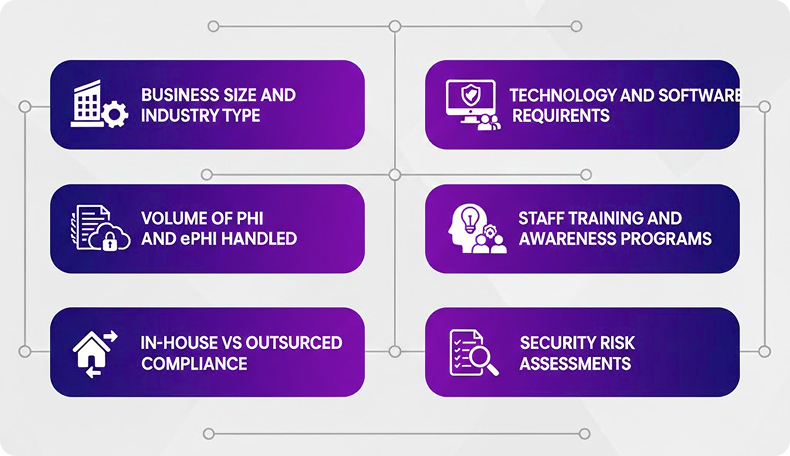
Business Size and Industry Type
The size of the business is the determinant of HIPAA compliance cost. Smaller clinics and sole practitioners may have fewer systems, staff, and suppliers, and thus their costs may be less. However, hospitals, health plans, and healthcare technology firms operate in more complicated settings that necessitate stratified safeguards, official compliance frameworks, and persistent monitoring. Industry type also matters. For example, in general, digital health providers and SaaS vendors allocate more resources to technical controls compared to conventional providers.
Volume of PHI and ePHI Handled
Compliance spending is directly proportional to the amount of Protected Health Information being processed. Organizations with high volumes of electronic PHI need to have more secure protection, such as encryption, access controls, audit logs, and monitoring tools. The higher the PHI exposure, the higher the cost of its protection and documentation of compliance.
In-House vs Outsourced Compliance
Other businesses are trying to handle HIPAA compliance in-house by delegating the duties to IT or administrative personnel. Although this can lower the cost of consulting, it can commonly result in the existence of hidden costs like employee training, compliance management, and remediation time lag. Outsourcing compliance does transfer costs to professional services, but it offers specialization, systematized processes, and accelerated response to OCR expectations.
Technology and Software Requirements
HIPAA-compliant technology is a significant cost driver. Secure networks, encrypted data storage, access management systems, and HIPAA-compliant software platforms all add to expenses. The organizations with old or legacy systems can incur more expenses because of the necessary upgrades or replacement with updated security requirements.
Staff Training and Awareness Programs
HIPAA training is not a one-time cost, but a continuous expense. The employees should be aware of the way of dealing with PHI, preventing unauthorized access, and acting in case of possible incidents. The compliance maturity is enhanced with regular training programs, policy acknowledgements, and awareness initiatives, but requires recurrent costs every year.
Security Risk Assessments
One of the most frequent sources of enforcement penalties in the absence is security risk assessment, which is a mandatory requirement of the HIPAA Security Rule. These tests determine vulnerabilities, measure threats, and inform risk management decisions. It is a recurring compliance cost and not a single investment, as most of the organizations require performing risk assessments every year or following the changes that took place in the major systems.
Identify What’s Driving Your Compliance Costs
Discover which risk factors are increasing your budget unnecessarily.
Detailed HIPAA Compliance Cost Breakdown
HIPAA compliance costs are spread across several categories. Some expenses occur at the start of a compliance program, while others continue year after year. Understanding where the money goes helps business owners plan budgets more accurately and avoid surprise costs later.
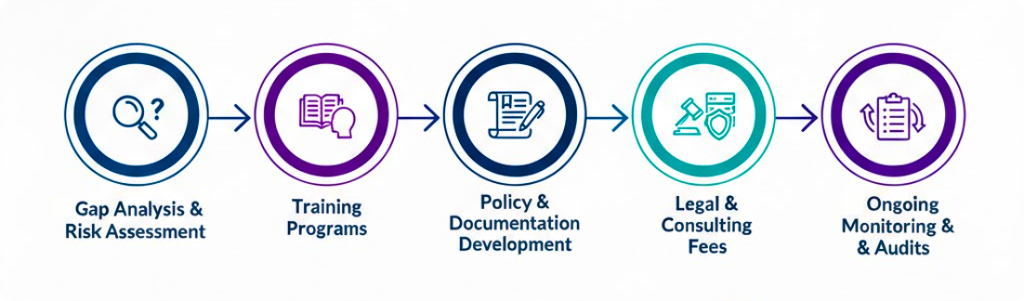
Gap Analysis & Risk Assessment
One of the steps that are required by the HIPAA Security Rule is a risk analysis. The majority of organizations start compliance by establishing the discrepancies between the existing practices and the HIPAA requirements. A HIPAA risk assessment will usually cost between $2000 and $15000, depending on the size of the business, complexity of the system, and amount of ePHI. Higher costs may be paid by larger organizations or cloud-based and multi-vendor organizations. Risk analysis should be done regularly, as it becomes a recurrent cost and not a single expense.
Training Programs
HIPAA mandates that members of the workforce receive training on privacy and security. The average price of HIPAA training per employee is typically between $20 and $100 every year, based on the level of training and the approach used to deliver the training. Whereas online training programs are cheaper, role-based training or customized training will be more expensive, but the possibility of unauthorized access and human error, which are the two major causes of violations, will be minimized.
Policy & Documentation Development
A HIPAA compliance program is based on policies and procedures. These records control access, response to breaches, data management, and vendors. The cost of developing or updating HIPAA policies is generally between $1,500 and $10,000, depending on the need to use templates or write-up. Updates are also required to be done constantly because systems, vendors, or regulations can vary.
Technical Safeguards
Technical safeguards constitute the biggest component of the HIPAA compliance cost. These are encryption, access controls, audit logging, secure backups, and network protections. The cost of upgrading a system and software that meets HIPAA requirements can range between $5,000 and $50,000 or more, depending on available infrastructure. Companies that process high amounts of ePHI or use cloud services tend to be more expensive.
Legal & Consulting Fees
Legal and consulting services are used to make sure that the compliance decisions are within the federal requirements. The rates of HIPAA compliance consulting are usually $150-300 per hour, based on experience and scope of engagement. Legal review becomes especially important when drafting Business Associate Agreements or responding to potential breaches, adding to overall compliance costs.
Ongoing Monitoring & Audits
HIPAA compliance is not limited to the first implementation. Constantly, internal audits and periodic evaluations should be conducted to ensure compliance with the law. The cost of these services ranges between $3,000 and $20,000 a year, and this depends on the size of the organization and the frequency of the monitoring. Continuous oversight helps reduce long-term risk and prevents costly enforcement actions tied to neglected compliance programs.
Hidden Costs of HIPAA Compliance
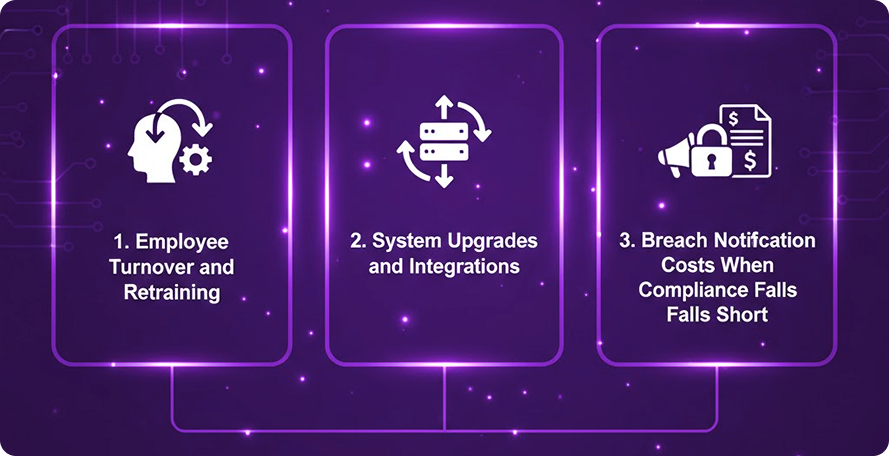
Many organizations budget for obvious HIPAA expenses such as audits and training. However, several hidden costs often surface later, especially when compliance planning is incomplete.
Gap Analysis & Risk Assessment
One of the steps that are required by the HIPAA Security Rule is a risk analysis. The majority of organizations start compliance by establishing the discrepancies between the existing practices and the HIPAA requirements. A HIPAA risk assessment will usually cost between $2000 and $15000, depending on the size of the business, complexity of the system, and amount of ePHI. Higher costs may be paid by larger organizations or cloud-based and multi-vendor organizations. Risk analysis should be done regularly, as it becomes a recurrent cost and not a single expense.
Training Programs
HIPAA mandates that members of the workforce receive training on privacy and security. The average price of HIPAA training per employee is typically between $20 and $100 every year, based on the level of training and the approach used to deliver the training. Whereas online training programs are cheaper, role-based training or customized training will be more expensive, but the possibility of unauthorized access and human error, which are the two major causes of violations, will be minimized.
Policy & Documentation Development
A HIPAA compliance program is based on policies and procedures. These records control access, response to breaches, data management, and vendors. The cost of developing or updating HIPAA policies is generally between $1,500 and $10,000, depending on the need to use templates or write-up. Updates are also required to be done constantly because systems, vendors, or regulations can vary.
Technical Safeguards
Technical safeguards constitute the biggest component of the HIPAA compliance cost. These are encryption, access controls, audit logging, secure backups, and network protections. The cost of upgrading a system and software that meets HIPAA requirements can range between $5,000 and $50,000 or more, depending on available infrastructure. Companies that process high amounts of ePHI or use cloud services tend to be more expensive.
Legal & Consulting Fees
Legal and consulting services are used to make sure that the compliance decisions are within the federal requirements. The rates of HIPAA compliance consulting are usually $150-300 per hour, based on experience and scope of engagement. Legal review becomes especially important when drafting Business Associate Agreements or responding to potential breaches, adding to overall compliance costs.
Ongoing Monitoring & Audits
HIPAA compliance is not limited to the first implementation. Constantly, internal audits and periodic evaluations should be conducted to ensure compliance with the law. The cost of these services ranges between $3,000 and $20,000 a year, and this depends on the size of the organization and the frequency of the monitoring. Continuous oversight helps reduce long-term risk and prevents costly enforcement actions tied to neglected compliance programs.
Avoid Unexpected Compliance Expenses
Prevent breach notifications, emergency upgrades, and reactive consulting fees.
Cost of HIPAA Non-Compliance
Failing to comply with HIPAA can quickly become more expensive than maintaining compliance. Enforcement actions, settlements, and reputational damage often outweigh the cost of proactive risk management.
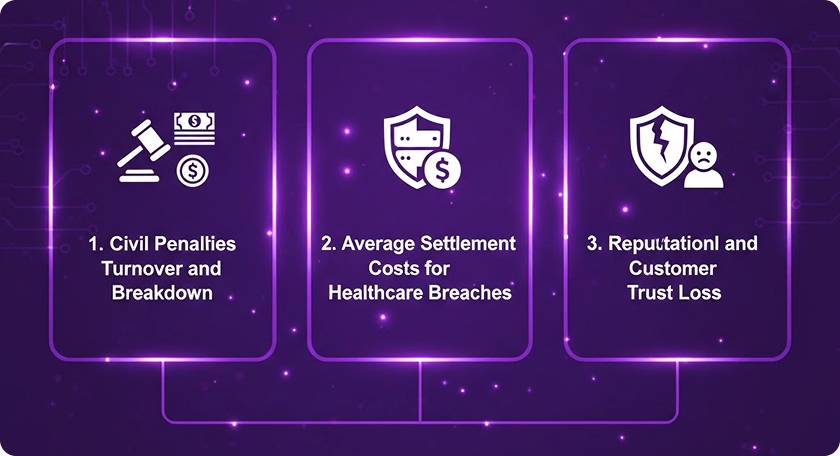
Civil Penalties Breakdown
HIPAA civil penalties are graded according to the degree of negligence. Depending on the nature of violations committed through reasonable cause or by willful negligence, the fine may be in the millions of dollars per year or hundreds of dollars per violation. The caps on the annual penalties are kept in line with inflation, increasing potential exposure each year.
Average Settlement Costs for Healthcare Breaches
A significant number of HIPAA enforcement cases are resolved by settlement and not by maximum penalties. These settlements often go as high as six or seven figures, especially when violations involve high amounts of PHI or prolonged breaches of compliance. The same cannot be said about smaller organizations, as OCR is imposing more and more basic compliance requirements.
Reputational and Customer Trust Loss
In addition to HIPAA non-compliance fines, lack of compliance also erodes trust. The breach may cause patients and partners to be reluctant to share the data, which affects retention and growth. Restoring credibility can also impose lasting financial implications in terms of extra investments in security, communication, and compliance programs.
How to Reduce HIPAA Compliance Costs Without Cutting Corners
Reducing HIPAA compliance costs does not mean lowering security standards. Instead, it means investing smarter and avoiding reactive spending that often leads to higher long-term expenses. Many organizations reduce long-term risk by working with specialized cybersecurity compliance consulting services instead of internally managing complex safeguards.
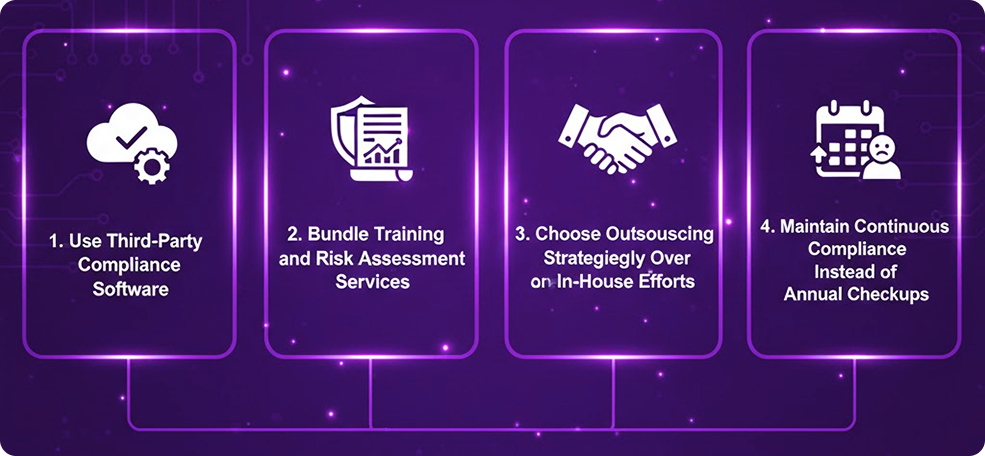
Use Third-Party Compliance Software
The HIPAA compliance software assists in the automation of policy management, risk tracking, training, and audit readiness. The centralization of documentation and monitoring ensures that organizations minimize the manual work done and decrease the number of errors. The model reduces the administrative expenses and enhances the uniformity of compliance operations.
Bundle Training and Risk Assessment Services
Bundling services can significantly reduce overall cost. Numerous vendors provide bundled packages that comprise HIPAA risk assessment, employee education, and policy. This helps to eliminate the duplication of work, and training is directly linked to the identified risks.
Choose Outsourcing Strategically Over In-House Efforts
Compliance in-house might seem less expensive initially, but in most cases, it has hidden expenses due to staff burnout, incomplete documentation, and delayed remediation. When compliance functions are outsourced to seasoned providers, not only do the results come much faster, but the prices are also predictable, and the specialized expertise is available without the expense of full-time employees.
Maintain Continuous Compliance Instead of Annual Checkups
Risks are likely to be overlooked annually during compliance review. Constant compliance checking helps distribute the expenses evenly across the year and minimizes the chances of costly corrective measures. This method reduces the total HIPAA compliance cost over time since it will avoid gaps before they cause enforcement. Following a structured HIPAA compliance checklist helps organizations avoid missed requirements that later increase compliance costs.
Who Should Budget for HIPAA Compliance?
HIPAA compliance is not limited to hospitals. Understanding the entities covered by HIPAA is extremely important before budgeting for compliance costs. Any organization that handles Protected Health Information must plan for compliance costs.
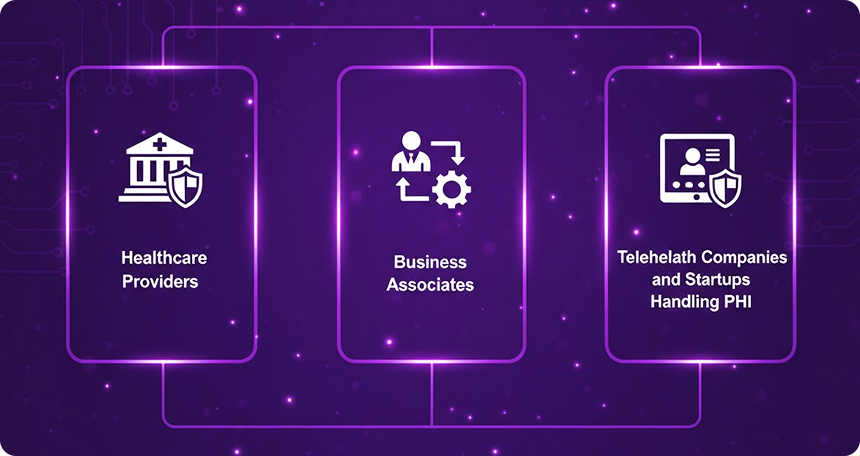
Healthcare Providers
To safeguard patient information and comply with federal regulations, hospitals, clinics, dental practices, and specialty providers will need to budget for HIPAA compliance.
Business Associates
IT service providers, billing companies, and cloud storage vendors, as well as PHI access consultants, are directly liable under HIPAA and have to fund compliance programs.
Telehealth Companies and Startups Handling PHI
Digital health platforms and startups processing PHI face the same HIPAA obligations as traditional providers. Early budgeting helps avoid costly retrofits and enforcement action
Planning HIPAA Compliance Costs the Right Way
The cost of HIPAA compliance is not a fixed number. It is a long-term investment that is determined by the size of the business, exposure to data, technology, and risk tolerance. Initial costs, including risk assessment, risk policies, and training, can seem substantial, but they are comparatively much less than the financial and reputational cost of enforcement.
The key here is planning. Companies that plan budgets, select the optimal combination of software and expert services, and ensure ongoing compliance do not spend reactive funds in the future. That is what FortNexShield assists organizations in doing. We facilitate systematic and efficient financial compliance by taking into account the HIPAA requirements and business realities, risk assessment, consulting, cybersecurity, and data privacy expertise.
Take Control of Your HIPAA Compliance Costs
Get a strategic compliance plan that balances risk, budget, and operational reality.
Conclusion
HIPAA compliance is a recurring operational expense, not a one-time project. The costs are quantifiable: $5,000–$25,000 annually for small practices, $25,000–$75,000 for mid-sized organizations, and $100,000+ for enterprises. These figures, however, pale against the alternative—civil penalties reaching millions of dollars, breach notification costs, and irreparable damage to patient trust.
Fortnexshield provides the structured approach required to manage HIPAA compliance efficiently. From initial risk assessments and policy development to ongoing monitoring and audit support, we help healthcare providers, business associates, and digital health companies align compliance investments with actual risk exposure.
How much does HIPAA compliance software cost?
The cost of HIPAA compliance software is approximately $1,000 to $10,000 a year for small businesses and mid-sized businesses. The bigger organizations need more sophisticated monitoring, vendor control, and support in multiple locations, which is why the costs are higher.
Is HIPAA compliance a one-time cost or recurring?
The cost of HIPAA compliance is continuous. Although initial costs are incurred in risk assessment and policy development, recurrent costs are involved in training, audits, monitoring, and system updates that should be undertaken to ensure that the system remains compliant over time.
How much does HIPAA employee training cost?
The annual cost of training HIPAA to employees typically ranges between $20 and $100, depending on the intensity of training, as well as the use of role-specific training modules.
Can startups reduce HIPAA compliance costs?
Yes. Some of the ways in which startups can minimize costs include compliance software, bundling services, and early compliance building. A pre-planned strategy will prevent costly retrofitting, emergency consultations, and penalty fines as the business grows.